
The Notebooks of Paul Brunton volume 7
Healing of the Self
The Negatives By Paul Brunton
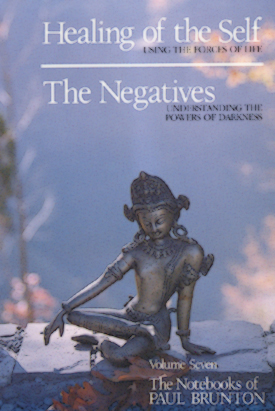
Retail/cover price: $16.95
Our price : $13.56
(You save $3.39!)
About this book:
The Notebooks of Paul Brunton volume 7
Healing of the Self
The Negatives
by Paul Brunton
"Unless we look behind the world's problems into the real and spiritual problems which they reflect, we can not properly understand them or solve them." —Paul Brunton
Subjects: Spirituality, Health, Healing
5.75 x 8.5, softcover
(hardcover out of stock)
320 pages
ISBN 10: 0-943914-27-2
ISBN 13: 978-0-943914-27-5
Of Special Interest
-
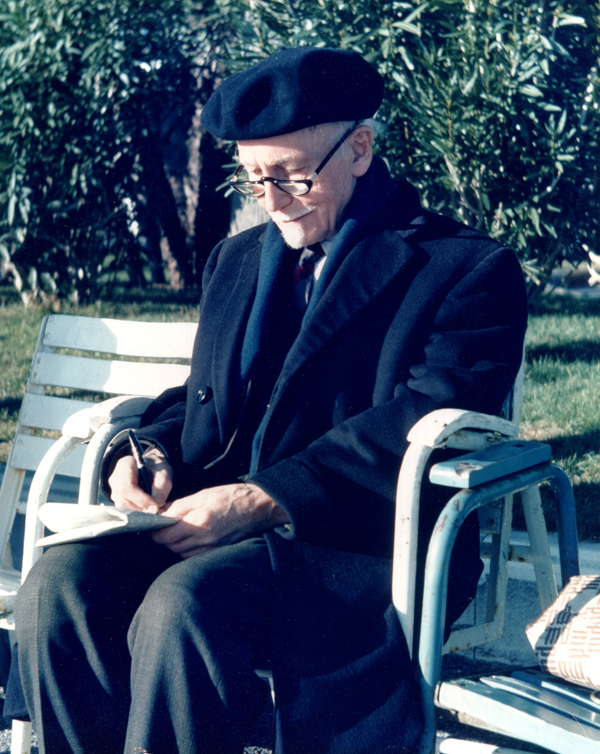
The Notebooks of Paul Brunton
Exclusive to Larson Publications
The highly acclaimed series that sets a new high-water mark for spiritual books.
Learn More -
New and timely!
The
Magdalene
Gates
"The book my soul has been thirsting for." —Mirabai Starr
Learn More -
Anthony Damiani (1922–1984)
An introduction to his ground-breaking work
"A truly great man . . . one of my closest spiritual brothers." —Dalai Lama
Learn More -

"Cosmic forces and indomitable power"
Soul Stories
Narrative sculpture — symbols that speak directly to intuition and spirit . . .
Learn More -
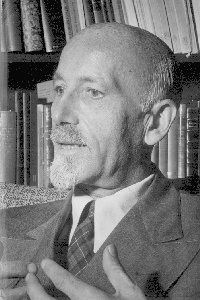
A good place to start with Paul Brunton
Perspectives: The Timeless Way of Wisdom
"Paul Brunton was a great original and got to a place of personal evolution that illumines the pathways of a future humanity." —Jean Houston
Learn More -
"A significant contribution" —Publishers Weekly
Ancient Rage
Is the deep life of the feminine duped by the patriarchal god? Will old age alter the intensity of our feeling?
Learn More -
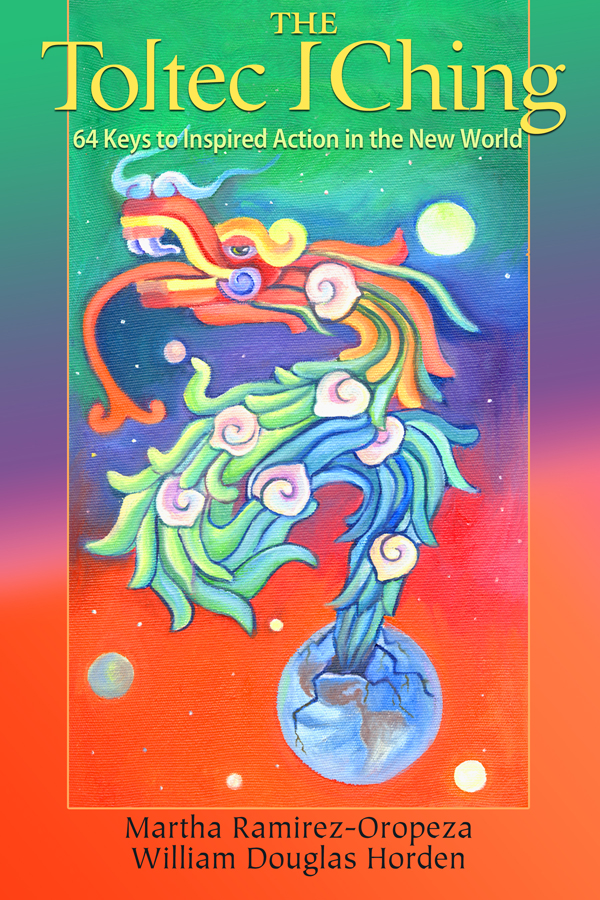
A new I Ching for our time
The Toltec
I Ching
A practical guide to hope, motivation, magic, and enlightenment — for young and old
Learn More -
Lex Hixon (1941–1995)
COMING
HOME
"The single best introductory book ever written on the world's great mystical traditions." —Ken Wilber, on Lex's Coming Home
Learn More -
.jpg)
Our newest Mom's Choice Gold award-winner!
Sharoo: Teen Queen
In this YA sequel to the Eedoo trilogy, Sharoo risks everything in a swirly, chaotic dimension beyond Plash
Learn More -
"breathtaking . . ."
"Invites us to engage in full awareness with the living wisdom of the cosmos." —The Mountain Astrologer
Learn More
Book Details
Part 1, Healing of the Self, explores fundamental principles of healing. It strikes sharp contrasts between surface, psychic, and spiritual methods, recommending a synthesis of conventional and alternative approaches to well-being. It also offers a variety of tested and proven techniques for self-healing and assisting conventional treatment.
Part 2, The Negatives, looks into the nature and roots of evil in both the individual and the world, with powerful tips for how to deal with them. It traces the activity of sinister forces in previous and possible future world war, emphasizing the urgency of recognizing and responding to the intensification of these forces both within and around us.
Category Ten: HEALING OF THE SELF
INTRODUCTION
1. THE LAWS OF NATURE
The spiritual importance of health
Disease has hidden causes
Physical mortality
The Philosopher's body
2. THE UNIVERSAL LIFE-FORCE
The vital body
Nature's healing power
Exercises and meditations
3. THE ORIGINS OF ILLNESS
The karma of the body
Mental states and physical conditions
The importance of hygiene
Dangers of drugs and alcohol
4. HEALERS OF THE BODY AND MIND
Services of the healing arts
Medicine and surgery
The practices of psychology
Neurosis and its treatment
Hypnosis
5. THE HEALING POWER OF THE OVERSELF
Spiritual and mental healing defined
Mental healing - its limited success
Healers and the spiritual path
The work of the Overself
Seek inner peace
Category Eleven: THE NEGATIVES
INTRODUCTION
1. THEIR NATURE
2. THEIR ROOTS IN EGO
Special tests for questers
3. THEIR PRESENCE IN THE WORLD
Materialism
Unbalanced technological
development
Hatred and violent revolution
Totalitarianism, Communism
War
Causes of war
World War II, Nazism, Fascism,
Hitler
Effects of World War II
World War III
Constructive alternatives: collective
Crime and punishment
Pacifism: general, non-nuclear ethic
Pacifism in light of nuclear threat
Constructive alternatives: individual
4. IN THOUGHTS, FEELINGS, VIOLENT PASSIONS
Their presence
Ways of responding
5. THEIR VISIBLE AND INVISIBLE HARM
“. . . a veritable treasure-trove of philosophic-spiritual wisdom.” —Elisabeth Kubler-Ross
“. . . sensible and compelling. His work can stand beside that of such East-West bridges as Merton, Huxley, Suzuki, Watts, and Radhakrishnan. It should appeal to anyone concerned personally and academically with issues of spirituality.” —Choice
“Vigorous, clear-minded and independent . . . a synthesis of Eastern mysticism and Western rationality. . . A rich volume.” —Library Journal
“. . . a great gift to us Westerners who are seeking the spiritual.” —Charles T. Tart
“A person of rare intelligence. . . thoroughly alive, and whole in the most significant, 'holy' sense of the word.” —Yoga Journal
For more reviews of the Notebooks series, click here
EDITORS' INTRODUCTION for category 10, Healing of the Self
Healing of the Self examines mind-body relationships in health and sickness. Contrasting conventional, psychic, and spiritual approaches to healing, it clarifies basic principles of healing and recommends a combination of conventional and alternative methods. It also offers a variety of practical techniques that have proven useful both in self-healing and in assisting conventional treatment.
Because of the "datedness" of some of the medical and psychological terminology that appears in this section, we would like to remind the reader that these notes were written and compiled during a period that spanned approximately forty years. During that period, the fields of medicine and psychology underwent many changes—not only in terminology but also in technique. In keeping with his lifelong interest in current events, P.B. wrote many of his paras in response to events and ideas as they developed within the evolution of the healing community itself. He seldom took the time to go back and update such notes, and even more rarely did he record the time at which they were composed.
As P.B. concerned himself primarily, however, with the salient issues and philosophic implications of such ideas, the meanings he addresses are still clear and timely—even when the language carrying them seems somewhat dated to professionals in the field. For that reason, we have made no attempt to update older terminology. We suspect that readers familiar with more current terminology will find it fruitful, as we have, to approach the more technical sections as excerpts from a researcher's workbook which parallels developments in the healing arts since the early 1940s.
Editorial conventions here are the same as stated in the introductions to Perspectives and The Quest. Likewise, (P) at the end of a para indicates that it also appears in Perspectives, the introductory survey volume to this series.
EDITORS' INTRODUCTION for category 11, The Negatives
The Negatives examines the nature and roots of evil in both the individual and the world. Tracing the activity of sinister forces in previous and possible future world war, it emphasizes the urgency with which the current world-situation demands clear recognition of—and intelligent individual response to—the intensification of these destructive forces both within and around us. The section suggests a number of constructive alternatives, both at the individual and at the social level, to our present course.
Some readers may wonder at the juxtaposition of these two categories—Healing of the Self and The Negatives--in a single volume (in the printed edition). They are certainly an odd pair if one approaches them from a materialistic viewpoint. From the perspective of Mentalism, however, both address the powerful influence of thought (technically including attitudes and emotions) upon our lives. In Healing of the Self, P.B. points out that the reciprocal influence of body and psyche suggests a common ground—Mind. Were it not for this mental nature of both psyche and body, many illnesses and their causes would remain mysteries. This section focuses as well on how conscious thought-processes may positively (or negatively) modify bodily health—within certain limits that it also clarifies. Similarly, in The Negatives, P.B. addresses the power of negative thought to produce adverse effects—not only upon ourselves but also upon our fellow human beings and our environment. In both sections we see also the power of human thought to attract from beyond its own normal range the influences—either for healing or for evil—of forces greater than that of our own personal selves. These two sections, then, are both pointed applications of the principles of Mentalism, which P.B. introduced in The Hidden Teaching Beyond Yoga and considers further in category twenty-one of the current Notebooks.
Readers who have come this far into The Notebooks will have noticed direct relationships among some of the twenty-eight "categories" in P.B.'s overall outline. (This outline appears as the table of contents for Perspectives and is printed at the end of each subsequent cloth and paperback volume. In the CD ROM edition, it appears in the introduction to Perspectives.) Categories ten and eleven stand in direct relationship to certain other categories. Healing of the Self (category ten) relates directly not only to The Negatives (category eleven) but also to Relax and Retreat (category three) and The Body (category five). The Negatives relates directly to Emotions and Ethics (category six), The Ego (category eight), and Human Experience. To discover P.B.'s full thought on issues common to these distinct sections, it is worthwhile to study them in relation to one another.
Editorial conventions here are the same as stated in introductions to Perspectives and The Quest. Likewise, (P) at the end of a para indicates that it also appears in Perspectives, the introductory volume to this series.
Excerpts from Notebooks category ten, Healing of the Self:
PREFATORY
It comes to this—that much of human disease and sickness is traceable to the faulty functioning of the human self. Learn how to use that self correctly in its physical, emotional, intellectual, and spiritual aspects and you learn how to prevent or cure part, or most, or even all of your ill health.
From chapter 2: THE UNIVERSAL LIFE-FORCE
1
There is a single source of Life which envelops the universe and pervades man. By its presence in himself he is able to exist physically and function mentally.
2
That Power which brought the body into existence originally maintains its involuntary functions, cures its diseases, and heals its wounds. It is within the body itself; it is the life-force aspect of the Soul, the Overself. Its curative virtue may express itself through various mediums—as herbs and foods, hot, cold, or mud baths, and deep breathings, exercise, and osteopathy—or it may express itself by their complete absence as in fasting, often the quickest and most effective medium. Or, disdaining physical methods entirely, it may act directly and almost miraculously as spiritual healing.(P)
3
The role of physical treatments of any kind is to supply favourable conditions for the action of the universal life-force which does the real healing work, just as food, water, and air supply materials to this same force for the repair of tissue and the regeneration of cells.
4
If it is the heart's activity which enables the whole body to exist and carry out its function in the world, it is the life-force's activity which enables the heart to carry out its function in the body.
5
The body has its own natural intelligence which serves it when the skin is cut or the flesh is wounded, coagulating the blood and forming new tissue. This intelligence heals, repairs, and re-energizes, provided you put no obstructions in its way through wrong diet, excessive activity, or bad habits.
6
Nature is an expression of the Universal Mind. The plants are given to us for medicine or food. It is an insult to Nature to despise these remedies.
7
The physical body attracts solar energies from the surrounding atmosphere, and vital elements from food, air, and water, and incorporates them into itself. This gives it the force whereby its limbs make their movements. But the ultimate sustaining strength is derived from the Overself.
From chapter 3: THE ORIGINS OF ILLNESS
The karma of the body
1
There is certainly evidence to indicate that man is dependent on his physical nature. There is also metaphysical evidence which reveals that the body is strongly influenced by the psyche. Materialist medicos are right so far as they go, but they cannot explain why such-and-such a person has a particular kind of physique, for example, which metaphysics can and does. That reason lies in former incarnations where concentration upon the present form took place. The quality of thought, plus the capacity to rise above it, are special keys to this problem.
2
All diseases are not, however, caused by soul illness. Destiny looms more largely in this matter than any physician is likely to admit, although it is equally true in the long run that man is the arbiter of his own fate, that the real self bestows every boon or ill upon its fragmentary expression, the personality, and bestows them with a just impersonal hand. But I must be content to leave the explanation of such a seeming paradox for another place and another time. Suffice it to hint that the past of individual men is infinitely more extended than is apparent at first glance.
3
As he penetrates deeper and deeper into that subtle world of his inner being, he finds that thought, feeling, and even speech affect its condition as powerfully as outer conditions affect his physical being. A complete falsehood or a gross exaggeration, when conscious and deliberate, stuns or inflames the delicate psyche. If persisted in and made habitual, the psyche becomes diseased and falls sick. This may be followed, soon or late according to the sensitivity of the man, by physical sickness. If sickness does not come, then he will be exposed to it in the form of a karma shadowing some future incarnation.
Excerpts from Notebooks category eleven, The Negatives:
PREFATORY:
We see what appears to be evil rampant in the world, especially in this century, but it is not absolute evil. It is destined to disintegrate and vanish. How can you be so sure? Because if man grows he comes to the truth. If he does not then he loses his manhood for a time. His evil goes with him. The man who lives in the truth lives in ethereal light, beautiful peace, even if the shadows are there. He sees on deeper levels where evil cannot penetrate and where the senses of unevolved men cannot extend. If you are not able to know the great truths for yourself then believe in them.
From chapter 1:THEIR NATURE
1
There is that in man which repeatedly works against his finer aspirations, which provides him with opposition. Upon this anvil his character is hammered out, shaped, and developed.
2
So soon as a being limits interests and welfare to its own self exclusively, so soon is it bound to come into conflict with other beings. Thus evil originates through the first being's ignorance, not through the presence of an absolute and eternal principle of evil.
3
Where there is total ignorance there is total self-love. From this proceed all negativity, sensuality, indulgence, and discord. Where there is total knowledge there is total turning to the eternal IS. From this proceed harmony, positivity, goodwill. Where hate and cruelty come to excess, there is denial of the divine principle and reversal of the twofold truth. Where attention and attraction are partly turned to the THAT WHICH IS, there is sharing of mind and will between good and evil.
4
The universal pretense of evil to be good and the occasional presence of some good in most evil create confusion or bewilderment in many minds and lead to wrong judgement in other minds. Is there any absolute way of distinguishing good from evil? The Russian Staretz Silouan, of Mount Athos, thought there was—that however good an end might seem, if the means used to attain it was bad, then it was to be rejected. It is easy for us to see that falsehood intended to lead others to act against their own welfare could be such a bad means, as also could malicious cruelty.
From chapter 2: THEIR ROOTS IN EGO
1
The wonder of the human soul which, even surrounded by the depravity and folly of today, can still aspire nobly and think loftily, would be quite puzzling did we not know the dual nature of the human entity and the divine nature of the laws which govern it.
2
So long as separate egos exist — separate from the cosmic ego in their own view, that is — so long will their ignorance produce what we call evil.
3
The ego, let loose upon the world, uninstructed and unbridled, cannot in the final reckoning benefit the world. To talk of service, without wisdom or character, may squander its goodwill in egoistic mire.
4
The evolution of each ego, of each entity conscious of a personal "I," passes through three stages through immense periods of time. In the first and earliest stage, it unfolds its distinct physical selfhood, acquires more and more consciousness of the personal "I," and hence divides and isolates itself from other egos. It seeks to differentiate itself from them. It feels the need to assert itself and its interests. This leads inevitably to antagonism towards them. Its movement is towards externality, a movement which must inevitably end in its taking the surface or appearance of things for reality, that is, in materialism. Here it is acquisitive. In its second and intermediate stage, it unfolds its mental selfhood and hence adds cunning to its separative and grasping tendencies, with intellect expanding to its extremest point. Here it is inquisitive. But midway in this stage, its descent comes to an end with a turning point where it halts, turns around, and begins to travel backward to its original source. In the third and last stage, the return towards its divine source continues. Its movement is now toward internality and — through meditation, investigation, and reflection — it ultimately achieves knowledge of its true being: its source, the Overself. And as all egos arise out of the Overself, the end of such a movement is one and the same for all — a common centre. Conflicts between them cease; mutual understanding, co-operation, and compassion spread. Hence, this stage is unitive.
The central point of the entire evolution is about where we now stand. Human attitudes and relations have reached their extreme degree of selfishness, separateness, struggle, and division, have experienced the resulting exhaustion of an unheard-of world crisis, but are beginning to reorient themselves towards an acknowledgment of the fundamental unity of the whole race. Thus, war reaches its most violent and terrible phase in the second stage and then abruptly begins to vanish from human life altogether. The separatist outlook must cease. Most of our troubles have arisen because we have continued it beyond the point where it was either useful or needful.
The unequal state of evolution of all these egos, when thrown together into a conglomerate group on a single planet, is also responsible for the conflicts which have marked mankind's own history. They stand on different steps of the ladder all the way from savagery to maturity. The backward ego naturally attacks or preys on the advanced one. Thus, the purely self-regarding ego, which was once an essential pattern of the evolutionary scheme — a necessary goal in the movement of life — becomes with time a discordant ingredient of that scheme, an obstructive impediment to that movement. If humanity is to travel upward and fulfil its higher destiny, it can do so only by enlarging its area of interest and extending its field of consciousness. It must, in short, seek to realize the Overself on the one hand, to feel its oneness on the other.
In his own words:
“Writing, which is an exercise of the intellect to some, is an act of worship to me. I rise from my desk in the same mood as that in which I leave an hour of prayer in an old cathedral, or of meditation in a little wood . . .” —from Perspectives, volume 1 in The Notebooks of Paul Brunton, p. 143
“P.B. as a private person does not count. There are hundreds of millions of such persons anyway. What is one man and his quest? P.B.’s personal experiences and views are not of any particular importance or special consequence. What happens to the individual man named P.B. is a matter of no account to anyone except himself. But what happens to the hundreds of thousands of spiritual seekers today who are following the same path that he pioneered is a serious matter and calls for prolonged consideration. Surely the hundreds of thousands of Western seekers who stand behind him and whom indeed, in one sense, he represents, do count. P.B. as a symbol of the scattered group of Western truth-seekers who, by following his writings so increasingly and so eagerly, virtually follow him also, does count. He personifies their aspirations, their repulsion from materialism and attraction toward mysticism, their interest in Oriental wisdom and their shepherdless state. As a symbol of this Western movement of thought, he is vastly greater than himself. In his mind and person the historic need for a new grasp of the contemporary spiritual problem found a plain-speaking voice . . .” —from Perspectives, volume 1 in The Notebooks of Paul Brunton, p. 145
Learn more about Paul Brunton through articles at the Paul Brunton Philosophic Foundation web site
Ebook
Electronic versions of this book are available from all major (Amazon Kindle, Barnes & Noble, Apple, Kobo, etc.) and most smaller ebook vendors. Please don't try to order ebooks directly from us, as we are not yet able to deliver anything to you in a preferred electronic format.
Hardcover
We are currently out of stock of this volume in hardcover.
To see all our Paul Brunton titles, scroll down to The Complete Paul Brunton Opus below.
To see and/or order individual volumes in The Notebooks of Paul Brunton, hover your mouse over the specific cover in the Notebooks section of Complete Paul Brunton Opus below, then click on Details in the box that appears within it.
Click here to see or order the complete set of The Notebooks of Paul Brunton.
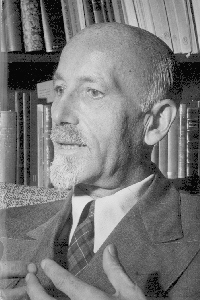
Paul Brunton helps us hear the melody behind the medley of today's "spiritual marketplace." His late writings raise the bar for what we can expect of spiritual teachings and teachers, and what we can do for ourselves. Born in London in 1898, he soon became a leading pioneer of much of what we now take for granted. He traveled widely throughout the world (long before it was fashionable) to meet living masters of various traditions with whom he then lived and studied. His eleven early books from 1934–1952 shared much of what he learned, and helped set the stage for dramatic east-west exchanges of the late 20th century. Paul Brunton left more than 10,000 pages of enormously helpful new work in notebooks he reserved for posthumous publication, much of which is now available as The Notebooks of Paul Brunton. See "The Complete Paul Brunton Opus" in blue below to see his many works available on this site. You can also search on Paul Brunton in the search bar to browse the selections, or click on a link below for specific connections.
Click here for a collection of articles about Paul Brunton.
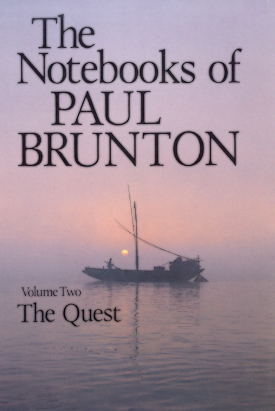
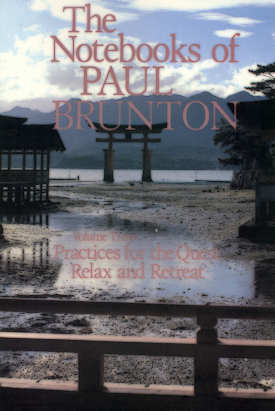
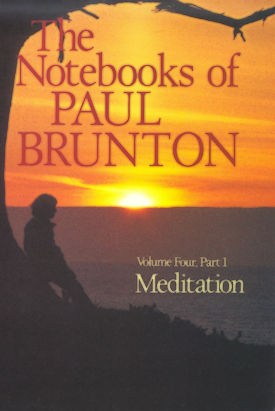
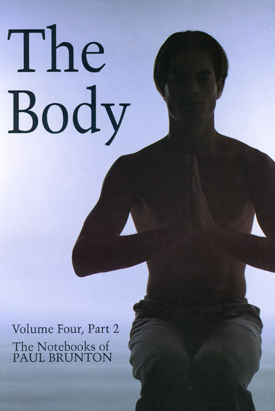
Click here for The Notebooks of Paul Brunton.
To access small theme-based books compiled from Paul Brunton's writings, scroll down to Derived from the Notebooks below.
To access Paul Brunton's early writings, published from 1934–1952, scroll down to Paul Brunton's Early Works below.
To access commentaries on Paul Brunton and his work by his leading student, Anthony Damiani, as well as other writings about Paul Brunton and/or his work, scroll down to Commentaries and Reflections on Paul Brunton and His Work below.
Book Details
Part 1, Healing of the Self, explores fundamental principles of healing. It strikes sharp contrasts between surface, psychic, and spiritual methods, recommending a synthesis of conventional and alternative approaches to well-being. It also offers a variety of tested and proven techniques for self-healing and assisting conventional treatment.
Part 2, The Negatives, looks into the nature and roots of evil in both the individual and the world, with powerful tips for how to deal with them. It traces the activity of sinister forces in previous and possible future world war, emphasizing the urgency of recognizing and responding to the intensification of these forces both within and around us.
Category Ten: HEALING OF THE SELF
INTRODUCTION
1. THE LAWS OF NATURE
The spiritual importance of health
Disease has hidden causes
Physical mortality
The Philosopher's body
2. THE UNIVERSAL LIFE-FORCE
The vital body
Nature's healing power
Exercises and meditations
3. THE ORIGINS OF ILLNESS
The karma of the body
Mental states and physical conditions
The importance of hygiene
Dangers of drugs and alcohol
4. HEALERS OF THE BODY AND MIND
Services of the healing arts
Medicine and surgery
The practices of psychology
Neurosis and its treatment
Hypnosis
5. THE HEALING POWER OF THE OVERSELF
Spiritual and mental healing defined
Mental healing - its limited success
Healers and the spiritual path
The work of the Overself
Seek inner peace
Category Eleven: THE NEGATIVES
INTRODUCTION
1. THEIR NATURE
2. THEIR ROOTS IN EGO
Special tests for questers
3. THEIR PRESENCE IN THE WORLD
Materialism
Unbalanced technological
development
Hatred and violent revolution
Totalitarianism, Communism
War
Causes of war
World War II, Nazism, Fascism,
Hitler
Effects of World War II
World War III
Constructive alternatives: collective
Crime and punishment
Pacifism: general, non-nuclear ethic
Pacifism in light of nuclear threat
Constructive alternatives: individual
4. IN THOUGHTS, FEELINGS, VIOLENT PASSIONS
Their presence
Ways of responding
5. THEIR VISIBLE AND INVISIBLE HARM
“. . . a veritable treasure-trove of philosophic-spiritual wisdom.” —Elisabeth Kubler-Ross
“. . . sensible and compelling. His work can stand beside that of such East-West bridges as Merton, Huxley, Suzuki, Watts, and Radhakrishnan. It should appeal to anyone concerned personally and academically with issues of spirituality.” —Choice
“Vigorous, clear-minded and independent . . . a synthesis of Eastern mysticism and Western rationality. . . A rich volume.” —Library Journal
“. . . a great gift to us Westerners who are seeking the spiritual.” —Charles T. Tart
“A person of rare intelligence. . . thoroughly alive, and whole in the most significant, 'holy' sense of the word.” —Yoga Journal
For more reviews of the Notebooks series, click here
EDITORS' INTRODUCTION for category 10, Healing of the Self
Healing of the Self examines mind-body relationships in health and sickness. Contrasting conventional, psychic, and spiritual approaches to healing, it clarifies basic principles of healing and recommends a combination of conventional and alternative methods. It also offers a variety of practical techniques that have proven useful both in self-healing and in assisting conventional treatment.
Because of the "datedness" of some of the medical and psychological terminology that appears in this section, we would like to remind the reader that these notes were written and compiled during a period that spanned approximately forty years. During that period, the fields of medicine and psychology underwent many changes—not only in terminology but also in technique. In keeping with his lifelong interest in current events, P.B. wrote many of his paras in response to events and ideas as they developed within the evolution of the healing community itself. He seldom took the time to go back and update such notes, and even more rarely did he record the time at which they were composed.
As P.B. concerned himself primarily, however, with the salient issues and philosophic implications of such ideas, the meanings he addresses are still clear and timely—even when the language carrying them seems somewhat dated to professionals in the field. For that reason, we have made no attempt to update older terminology. We suspect that readers familiar with more current terminology will find it fruitful, as we have, to approach the more technical sections as excerpts from a researcher's workbook which parallels developments in the healing arts since the early 1940s.
Editorial conventions here are the same as stated in the introductions to Perspectives and The Quest. Likewise, (P) at the end of a para indicates that it also appears in Perspectives, the introductory survey volume to this series.
EDITORS' INTRODUCTION for category 11, The Negatives
The Negatives examines the nature and roots of evil in both the individual and the world. Tracing the activity of sinister forces in previous and possible future world war, it emphasizes the urgency with which the current world-situation demands clear recognition of—and intelligent individual response to—the intensification of these destructive forces both within and around us. The section suggests a number of constructive alternatives, both at the individual and at the social level, to our present course.
Some readers may wonder at the juxtaposition of these two categories—Healing of the Self and The Negatives--in a single volume (in the printed edition). They are certainly an odd pair if one approaches them from a materialistic viewpoint. From the perspective of Mentalism, however, both address the powerful influence of thought (technically including attitudes and emotions) upon our lives. In Healing of the Self, P.B. points out that the reciprocal influence of body and psyche suggests a common ground—Mind. Were it not for this mental nature of both psyche and body, many illnesses and their causes would remain mysteries. This section focuses as well on how conscious thought-processes may positively (or negatively) modify bodily health—within certain limits that it also clarifies. Similarly, in The Negatives, P.B. addresses the power of negative thought to produce adverse effects—not only upon ourselves but also upon our fellow human beings and our environment. In both sections we see also the power of human thought to attract from beyond its own normal range the influences—either for healing or for evil—of forces greater than that of our own personal selves. These two sections, then, are both pointed applications of the principles of Mentalism, which P.B. introduced in The Hidden Teaching Beyond Yoga and considers further in category twenty-one of the current Notebooks.
Readers who have come this far into The Notebooks will have noticed direct relationships among some of the twenty-eight "categories" in P.B.'s overall outline. (This outline appears as the table of contents for Perspectives and is printed at the end of each subsequent cloth and paperback volume. In the CD ROM edition, it appears in the introduction to Perspectives.) Categories ten and eleven stand in direct relationship to certain other categories. Healing of the Self (category ten) relates directly not only to The Negatives (category eleven) but also to Relax and Retreat (category three) and The Body (category five). The Negatives relates directly to Emotions and Ethics (category six), The Ego (category eight), and Human Experience. To discover P.B.'s full thought on issues common to these distinct sections, it is worthwhile to study them in relation to one another.
Editorial conventions here are the same as stated in introductions to Perspectives and The Quest. Likewise, (P) at the end of a para indicates that it also appears in Perspectives, the introductory volume to this series.
Excerpts from Notebooks category ten, Healing of the Self:
PREFATORY
It comes to this—that much of human disease and sickness is traceable to the faulty functioning of the human self. Learn how to use that self correctly in its physical, emotional, intellectual, and spiritual aspects and you learn how to prevent or cure part, or most, or even all of your ill health.
From chapter 2: THE UNIVERSAL LIFE-FORCE
1
There is a single source of Life which envelops the universe and pervades man. By its presence in himself he is able to exist physically and function mentally.
2
That Power which brought the body into existence originally maintains its involuntary functions, cures its diseases, and heals its wounds. It is within the body itself; it is the life-force aspect of the Soul, the Overself. Its curative virtue may express itself through various mediums—as herbs and foods, hot, cold, or mud baths, and deep breathings, exercise, and osteopathy—or it may express itself by their complete absence as in fasting, often the quickest and most effective medium. Or, disdaining physical methods entirely, it may act directly and almost miraculously as spiritual healing.(P)
3
The role of physical treatments of any kind is to supply favourable conditions for the action of the universal life-force which does the real healing work, just as food, water, and air supply materials to this same force for the repair of tissue and the regeneration of cells.
4
If it is the heart's activity which enables the whole body to exist and carry out its function in the world, it is the life-force's activity which enables the heart to carry out its function in the body.
5
The body has its own natural intelligence which serves it when the skin is cut or the flesh is wounded, coagulating the blood and forming new tissue. This intelligence heals, repairs, and re-energizes, provided you put no obstructions in its way through wrong diet, excessive activity, or bad habits.
6
Nature is an expression of the Universal Mind. The plants are given to us for medicine or food. It is an insult to Nature to despise these remedies.
7
The physical body attracts solar energies from the surrounding atmosphere, and vital elements from food, air, and water, and incorporates them into itself. This gives it the force whereby its limbs make their movements. But the ultimate sustaining strength is derived from the Overself.
From chapter 3: THE ORIGINS OF ILLNESS
The karma of the body
1
There is certainly evidence to indicate that man is dependent on his physical nature. There is also metaphysical evidence which reveals that the body is strongly influenced by the psyche. Materialist medicos are right so far as they go, but they cannot explain why such-and-such a person has a particular kind of physique, for example, which metaphysics can and does. That reason lies in former incarnations where concentration upon the present form took place. The quality of thought, plus the capacity to rise above it, are special keys to this problem.
2
All diseases are not, however, caused by soul illness. Destiny looms more largely in this matter than any physician is likely to admit, although it is equally true in the long run that man is the arbiter of his own fate, that the real self bestows every boon or ill upon its fragmentary expression, the personality, and bestows them with a just impersonal hand. But I must be content to leave the explanation of such a seeming paradox for another place and another time. Suffice it to hint that the past of individual men is infinitely more extended than is apparent at first glance.
3
As he penetrates deeper and deeper into that subtle world of his inner being, he finds that thought, feeling, and even speech affect its condition as powerfully as outer conditions affect his physical being. A complete falsehood or a gross exaggeration, when conscious and deliberate, stuns or inflames the delicate psyche. If persisted in and made habitual, the psyche becomes diseased and falls sick. This may be followed, soon or late according to the sensitivity of the man, by physical sickness. If sickness does not come, then he will be exposed to it in the form of a karma shadowing some future incarnation.
Excerpts from Notebooks category eleven, The Negatives:
PREFATORY:
We see what appears to be evil rampant in the world, especially in this century, but it is not absolute evil. It is destined to disintegrate and vanish. How can you be so sure? Because if man grows he comes to the truth. If he does not then he loses his manhood for a time. His evil goes with him. The man who lives in the truth lives in ethereal light, beautiful peace, even if the shadows are there. He sees on deeper levels where evil cannot penetrate and where the senses of unevolved men cannot extend. If you are not able to know the great truths for yourself then believe in them.
From chapter 1:THEIR NATURE
1
There is that in man which repeatedly works against his finer aspirations, which provides him with opposition. Upon this anvil his character is hammered out, shaped, and developed.
2
So soon as a being limits interests and welfare to its own self exclusively, so soon is it bound to come into conflict with other beings. Thus evil originates through the first being's ignorance, not through the presence of an absolute and eternal principle of evil.
3
Where there is total ignorance there is total self-love. From this proceed all negativity, sensuality, indulgence, and discord. Where there is total knowledge there is total turning to the eternal IS. From this proceed harmony, positivity, goodwill. Where hate and cruelty come to excess, there is denial of the divine principle and reversal of the twofold truth. Where attention and attraction are partly turned to the THAT WHICH IS, there is sharing of mind and will between good and evil.
4
The universal pretense of evil to be good and the occasional presence of some good in most evil create confusion or bewilderment in many minds and lead to wrong judgement in other minds. Is there any absolute way of distinguishing good from evil? The Russian Staretz Silouan, of Mount Athos, thought there was—that however good an end might seem, if the means used to attain it was bad, then it was to be rejected. It is easy for us to see that falsehood intended to lead others to act against their own welfare could be such a bad means, as also could malicious cruelty.
From chapter 2: THEIR ROOTS IN EGO
1
The wonder of the human soul which, even surrounded by the depravity and folly of today, can still aspire nobly and think loftily, would be quite puzzling did we not know the dual nature of the human entity and the divine nature of the laws which govern it.
2
So long as separate egos exist — separate from the cosmic ego in their own view, that is — so long will their ignorance produce what we call evil.
3
The ego, let loose upon the world, uninstructed and unbridled, cannot in the final reckoning benefit the world. To talk of service, without wisdom or character, may squander its goodwill in egoistic mire.
4
The evolution of each ego, of each entity conscious of a personal "I," passes through three stages through immense periods of time. In the first and earliest stage, it unfolds its distinct physical selfhood, acquires more and more consciousness of the personal "I," and hence divides and isolates itself from other egos. It seeks to differentiate itself from them. It feels the need to assert itself and its interests. This leads inevitably to antagonism towards them. Its movement is towards externality, a movement which must inevitably end in its taking the surface or appearance of things for reality, that is, in materialism. Here it is acquisitive. In its second and intermediate stage, it unfolds its mental selfhood and hence adds cunning to its separative and grasping tendencies, with intellect expanding to its extremest point. Here it is inquisitive. But midway in this stage, its descent comes to an end with a turning point where it halts, turns around, and begins to travel backward to its original source. In the third and last stage, the return towards its divine source continues. Its movement is now toward internality and — through meditation, investigation, and reflection — it ultimately achieves knowledge of its true being: its source, the Overself. And as all egos arise out of the Overself, the end of such a movement is one and the same for all — a common centre. Conflicts between them cease; mutual understanding, co-operation, and compassion spread. Hence, this stage is unitive.
The central point of the entire evolution is about where we now stand. Human attitudes and relations have reached their extreme degree of selfishness, separateness, struggle, and division, have experienced the resulting exhaustion of an unheard-of world crisis, but are beginning to reorient themselves towards an acknowledgment of the fundamental unity of the whole race. Thus, war reaches its most violent and terrible phase in the second stage and then abruptly begins to vanish from human life altogether. The separatist outlook must cease. Most of our troubles have arisen because we have continued it beyond the point where it was either useful or needful.
The unequal state of evolution of all these egos, when thrown together into a conglomerate group on a single planet, is also responsible for the conflicts which have marked mankind's own history. They stand on different steps of the ladder all the way from savagery to maturity. The backward ego naturally attacks or preys on the advanced one. Thus, the purely self-regarding ego, which was once an essential pattern of the evolutionary scheme — a necessary goal in the movement of life — becomes with time a discordant ingredient of that scheme, an obstructive impediment to that movement. If humanity is to travel upward and fulfil its higher destiny, it can do so only by enlarging its area of interest and extending its field of consciousness. It must, in short, seek to realize the Overself on the one hand, to feel its oneness on the other.
In his own words:
“Writing, which is an exercise of the intellect to some, is an act of worship to me. I rise from my desk in the same mood as that in which I leave an hour of prayer in an old cathedral, or of meditation in a little wood . . .” —from Perspectives, volume 1 in The Notebooks of Paul Brunton, p. 143
“P.B. as a private person does not count. There are hundreds of millions of such persons anyway. What is one man and his quest? P.B.’s personal experiences and views are not of any particular importance or special consequence. What happens to the individual man named P.B. is a matter of no account to anyone except himself. But what happens to the hundreds of thousands of spiritual seekers today who are following the same path that he pioneered is a serious matter and calls for prolonged consideration. Surely the hundreds of thousands of Western seekers who stand behind him and whom indeed, in one sense, he represents, do count. P.B. as a symbol of the scattered group of Western truth-seekers who, by following his writings so increasingly and so eagerly, virtually follow him also, does count. He personifies their aspirations, their repulsion from materialism and attraction toward mysticism, their interest in Oriental wisdom and their shepherdless state. As a symbol of this Western movement of thought, he is vastly greater than himself. In his mind and person the historic need for a new grasp of the contemporary spiritual problem found a plain-speaking voice . . .” —from Perspectives, volume 1 in The Notebooks of Paul Brunton, p. 145
Learn more about Paul Brunton through articles at the Paul Brunton Philosophic Foundation web site
Ebook
Electronic versions of this book are available from all major (Amazon Kindle, Barnes & Noble, Apple, Kobo, etc.) and most smaller ebook vendors. Please don't try to order ebooks directly from us, as we are not yet able to deliver anything to you in a preferred electronic format.
Hardcover
We are currently out of stock of this volume in hardcover.
To see all our Paul Brunton titles, scroll down to The Complete Paul Brunton Opus below.
To see and/or order individual volumes in The Notebooks of Paul Brunton, hover your mouse over the specific cover in the Notebooks section of Complete Paul Brunton Opus below, then click on Details in the box that appears within it.
Click here to see or order the complete set of The Notebooks of Paul Brunton.
About Paul Brunton
Paul Brunton helps us hear the melody behind the medley of today's "spiritual marketplace." His late writings raise the bar for what we can expect of spiritual teachings and teachers, and what we can do for ourselves. Born in London in 1898, he soon became a leading pioneer of much of what we now take for granted. He traveled widely throughout the world (long before it was fashionable) to meet living masters of various traditions with whom he then lived and studied. His eleven early books from 1934–1952 shared much of what he learned, and helped set the stage for dramatic east-west exchanges of the late 20th century. Paul Brunton left more than 10,000 pages of enormously helpful new work in notebooks he reserved for posthumous publication, much of which is now available as The Notebooks of Paul Brunton. See "The Complete Paul Brunton Opus" in blue below to see his many works available on this site. You can also search on Paul Brunton in the search bar to browse the selections, or click on a link below for specific connections.
Click here for a collection of articles about Paul Brunton.
Click here for The Notebooks of Paul Brunton.
To access small theme-based books compiled from Paul Brunton's writings, scroll down to Derived from the Notebooks below.
To access Paul Brunton's early writings, published from 1934–1952, scroll down to Paul Brunton's Early Works below.
To access commentaries on Paul Brunton and his work by his leading student, Anthony Damiani, as well as other writings about Paul Brunton and/or his work, scroll down to Commentaries and Reflections on Paul Brunton and His Work below.
.jpg)
.jpg)
.jpg)
.jpg)
.jpg)
.jpg)
.jpg)
.jpg)
.jpg)
.jpg)
The Complete Paul Brunton Opus:
Paul Brunton's most mature work, in the order he specified for posthumous publication.
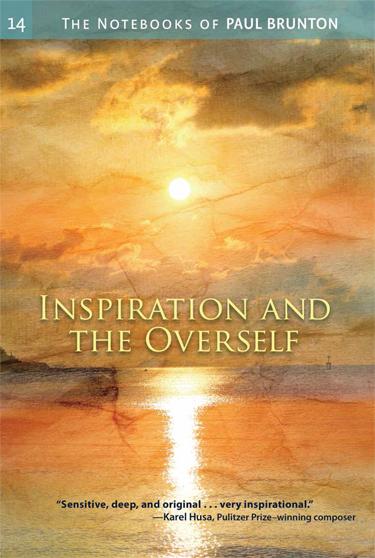
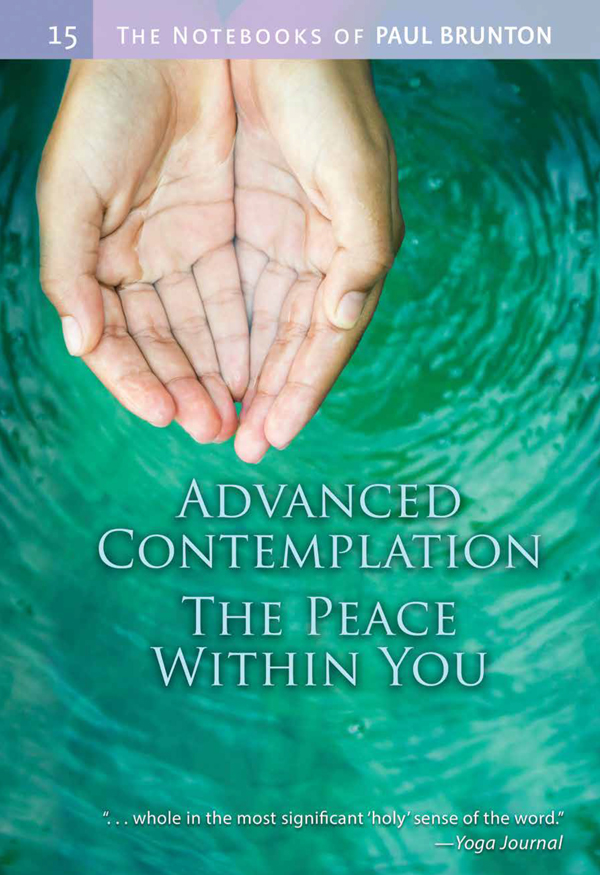
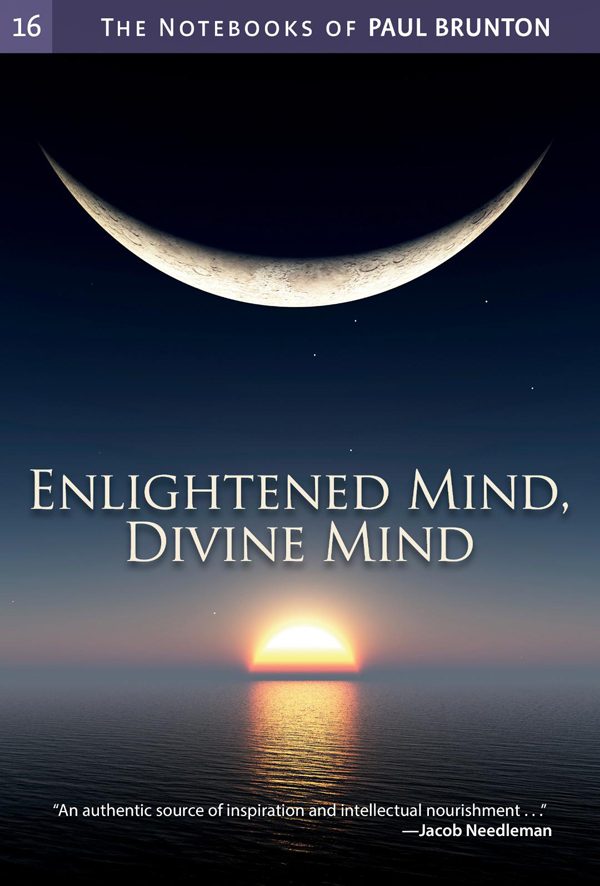
Smaller books on popular/timely themes, developed from the Notebooks and published posthumously.
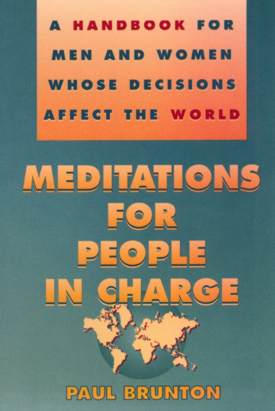
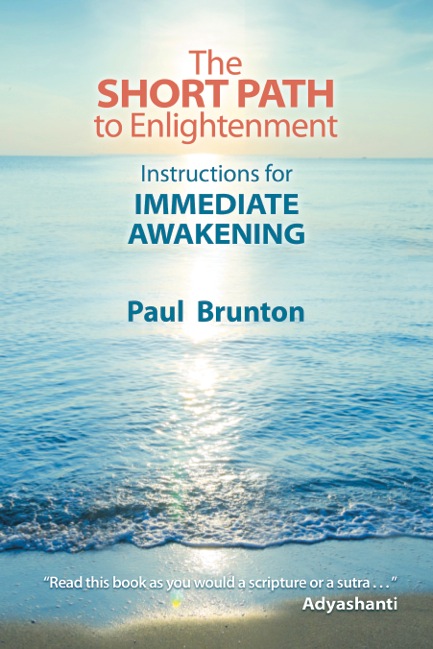
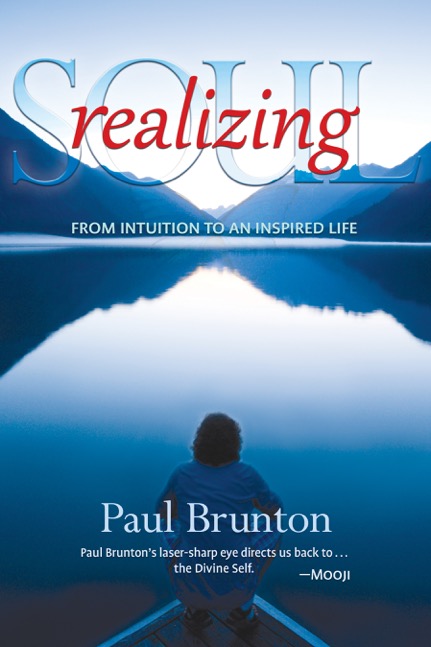
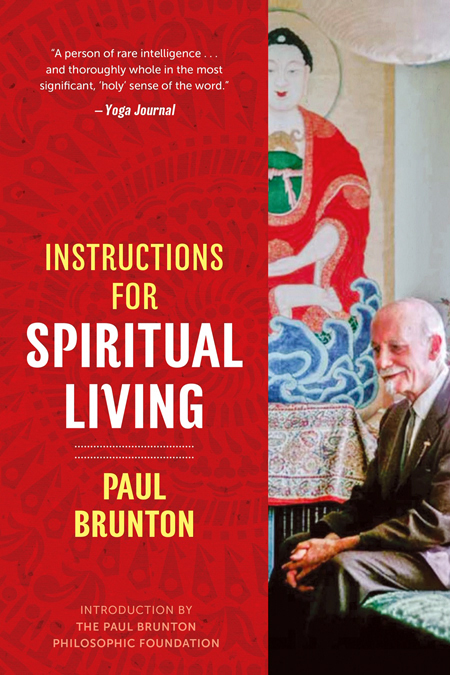
Paul Brunton's works published during his lifetime from 1934-1952
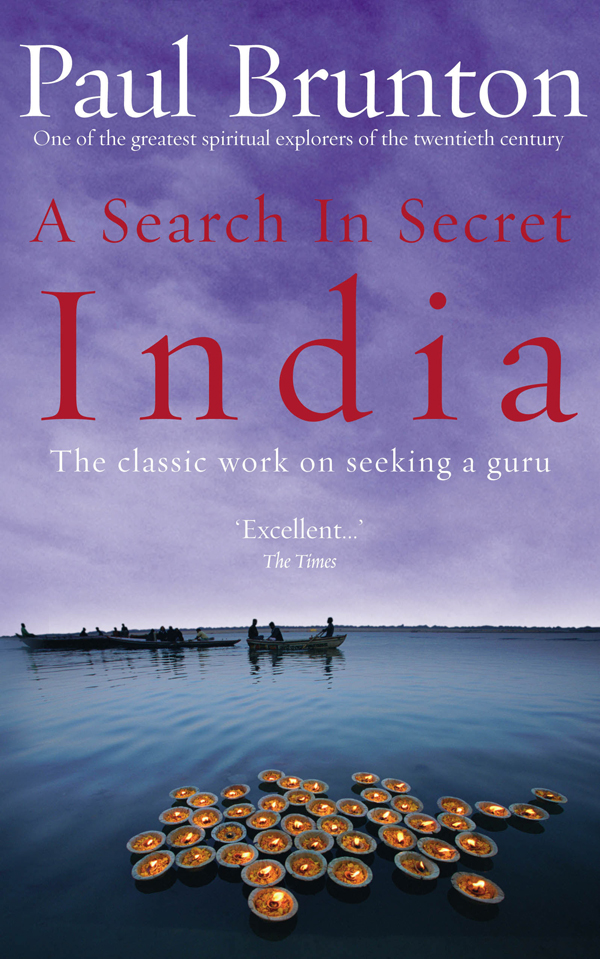

Commentaries/Reflections by other authors on Paul Brunton or his works.
Of Special Interest
-
The Notebooks of Paul Brunton
Exclusive to Larson Publications
The highly acclaimed series that sets a new high-water mark for spiritual books.
Learn More -
New and timely!
The
Magdalene
Gates
"The book my soul has been thirsting for." —Mirabai Starr
Learn More -
Anthony Damiani (1922–1984)
An introduction to his ground-breaking work
"A truly great man . . . one of my closest spiritual brothers." —Dalai Lama
Learn More -
"Cosmic forces and indomitable power"
Soul Stories
Narrative sculpture — symbols that speak directly to intuition and spirit . . .
Learn More -
A good place to start with Paul Brunton
Perspectives: The Timeless Way of Wisdom
"Paul Brunton was a great original and got to a place of personal evolution that illumines the pathways of a future humanity." —Jean Houston
Learn More -
"A significant contribution" —Publishers Weekly
Ancient Rage
Is the deep life of the feminine duped by the patriarchal god? Will old age alter the intensity of our feeling?
Learn More -
A new I Ching for our time
The Toltec
I Ching
A practical guide to hope, motivation, magic, and enlightenment — for young and old
Learn More -
Lex Hixon (1941–1995)
COMING
HOME
"The single best introductory book ever written on the world's great mystical traditions." —Ken Wilber, on Lex's Coming Home
Learn More -
Our newest Mom's Choice Gold award-winner!
Sharoo: Teen Queen
In this YA sequel to the Eedoo trilogy, Sharoo risks everything in a swirly, chaotic dimension beyond Plash
Learn More -
"breathtaking . . ."
"Invites us to engage in full awareness with the living wisdom of the cosmos." —The Mountain Astrologer
Learn More