
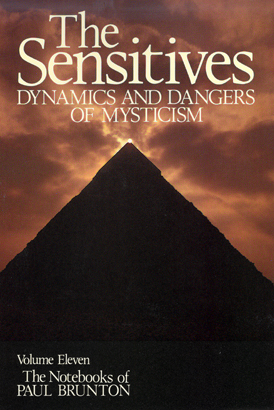
The Notebooks of Paul Brunton volume 11
The Sensitives
Dynamics and Dangers of Mysticism By Paul Brunton
Retail/cover price: $24.95
Our price : $19.96
(You save $4.99!)
About this book:
The Notebooks of Paul Brunton volume 11
The Sensitives
Dynamics and Dangers of Mysticism
by Paul Brunton
On the main differences between spiritual intuition and self-flattering illusion, real spiritual teachers and self-deluding cultists, productive spiritual practices and dangerous fascinations . . .
Subjects: Spirituality, Occult Science, Parapsychology
5.75 x 8.5, softcover
(hardcover is available)
350 pages
ISBN 10: 0-943914-34-5
ISBN 13: 978-0-943914-34-3
Of Special Interest
-
The Notebooks of Paul Brunton
Exclusive to Larson Publications
The highly acclaimed series that sets a new high-water mark for spiritual books.
Learn More -

New and timely!
The
Magdalene
Gates
"The book my soul has been thirsting for." —Mirabai Starr
Learn More -
Anthony Damiani (1922–1984)
An introduction to his ground-breaking work
"A truly great man . . . one of my closest spiritual brothers." —Dalai Lama
Learn More -

"Cosmic forces and indomitable power"
Soul Stories
Narrative sculpture — symbols that speak directly to intuition and spirit . . .
Learn More -
A good place to start with Paul Brunton
Perspectives: The Timeless Way of Wisdom
"Paul Brunton was a great original and got to a place of personal evolution that illumines the pathways of a future humanity." —Jean Houston
Learn More -

"A significant contribution" —Publishers Weekly
Ancient Rage
Is the deep life of the feminine duped by the patriarchal god? Will old age alter the intensity of our feeling?
Learn More -

A new I Ching for our time
The Toltec
I Ching
A practical guide to hope, motivation, magic, and enlightenment — for young and old
Learn More -
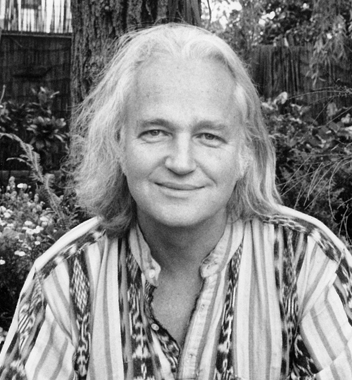
Lex Hixon (1941–1995)
COMING
HOME
"The single best introductory book ever written on the world's great mystical traditions." —Ken Wilber, on Lex's Coming Home
Learn More -
.jpg)
Our newest Mom's Choice Gold award-winner!
Sharoo: Teen Queen
In this YA sequel to the Eedoo trilogy, Sharoo risks everything in a swirly, chaotic dimension beyond Plash
Learn More -

"breathtaking . . ."
"Invites us to engage in full awareness with the living wisdom of the cosmos." —The Mountain Astrologer
Learn More
Book Details
Potentially life-saving advice on trials that arise inevitably on the quest. The Sensitives is a timely, informed evaluation of mysticism, paranormal experience, sects and cults. Grounded in a clear distinction between productive spiritual practice and occult sidetracks, it reports on:
- how to distinguish self-flattering illusions from authentic spiritual intuitions
- what draws people (leaders and followers) to cults
- how to distinguish authentic spiritual teachers from dogmatic or deluded cult leaders
- how to bring the rational and the mystical into creative harmony
- much, much more
Category Sixteen: THE SENSITIVES
INTRODUCTION
1. MYSTICAL LIFE IN THE MODERN WORLD
Development
Continuing the tradition
Purpose
The scientific and the superstitious
2. PHASES OF MYSTICAL DEVELOPMENT
The transience of mystical emotions
From personal vision to impersonal being
From inner peace to inner reality
Moral re-education
At home in two worlds
Philosophy and mysticism
Rational mysticism
The power of rational faith
The goal of truth
The path beyond yoga
The completion in knowledge
3. PHILOSOPHY, MYSTICISM, AND THE OCCULT
A criticism of the mystic
The extremes of mysticism
Philosophy attracts the few
Distinguishing the spiritual and psychic
The lure of occultism
4. THOSE WHO SEEK
The wanderers
The innocents
The dreamers
The unbalanced
5. PSEUDO AND IMPERFECT TEACHERS
The prevalence of charlatans
Difficulty of recognizing them
Domination and narrowness
Incomplete teachers
The ego's ambition
6. DELUSIONS AND PAINFUL AWAKENINGS
The illusion of perfection
Superstition, imagination, and self-deception
Penalties of delusion
The value of disillusionment
7. THE PATH OF INDIVIDUALITY
Dangers of dependence
Independence
Be responsible
Use your judgement
Be discriminating
8. CHRISTIAN SCIENCE, OTHER SPIRITUAL MOVEMENTS
Virtues and faults
The hidden materialism
9. INSPIRATION AND CONFUSION
Conflicting tenets, contradictory 'revelations'
Interpreting mystical experience
Admixture of ego
10. THE IS IS NOT AN ISM
Limitations of dogma
Misuse of mystery
11. FANATICISM, MONEY, POWERS, DRUGS
Fanaticism
Deluded guides, gullible followers
Money
The abuse of power
Drugs
12. THE INTERMEDIATE ZONE
Tests, ordeals, temptations
Danger signals, protective measures
13. THE OCCULT
A choice of directions
The seductive shadow-world
Occultists and psychics
Occult practices
Hypnotism
Mediumship, channeling
14. THE SENSITIVE MIND
Psychic sensitivity, personal sensitivity
Telepathy, mental influences
Clairvoyance
Evaluating intuitions and 'messages'
15. ILLUMINATIONS
Properties of imagination
Spiritual reality, mental imagery
Conditioning factors
The true Word of revelation
“. . . a veritable treasure-trove of philosophic-spiritual wisdom.” —Elisabeth Kubler-Ross
“. . . sensible and compelling. His work can stand beside that of such East-West bridges as Merton, Huxley, Suzuki, Watts, and Radhakrishnan. It should appeal to anyone concerned personally and academically with issues of spirituality.” —Choice
“Vigorous, clear-minded and independent . . . a synthesis of Eastern mysticism and Western rationality. . . A rich volume.” —Library Journal
“. . . a great gift to us Westerners who are seeking the spiritual.” —Charles T. Tart
“A person of rare intelligence. . . thoroughly alive, and whole in the most significant, 'holy' sense of the word.” —Yoga Journal
For more reviews of the Notebooks series, click here
The Sensitives is a timely, informed evaluation of mysticism, paranormal experience, sects and cults. It is grounded in a clear distinction between productive spiritual practice and dangerous fascination with the occult. This distinction will be extraordinarily useful to a variety of readers: to individuals involved in or about to undertake any sort of spiritual practice, to psychologists and psychiatrists, and to people unable to understand or assess the interests and practices of friends or relatives associated with a sect or cult.
The Sensitives is a necessarily complex volume, covering one of the three largest sections in the notebooks series; the others are Human Experience (category thirteen) and What Is Philosophy? (category twenty). During our visits with P.B., he often stressed the urgent need to differentiate spiritual and psychic practices — in oneself, in others, and in various groups and teachings. This concern carries over into his writings, from the early works on India and Egypt, through the several notebooks of interviews with mystics around the world, and into the 4000 paras selected here.
There comes a time when a little success in meditation, study, or self-discipline begins to show itself: a time when some parts of the ego thin out sufficiently to let a little light in. This light shines through the cracks in the ego, but also powerfully lights up the ego itself. These refracted colors are so bold and beautiful, the pure light is so hard to look into, that most questers begin to wander from their intended goal. This category addresses the nature and end result of following these lesser lights — the revelatory, intuitive, visionary, psychic, mediumistic, and magical. It examines the groups of eager followers which spring up around leaders who have sought and gained some mastery of these lights, but who themselves are, in one form or another, powerfully misled. As the light of the soul shines into the recesses of the ego, it activates the latent desires for fame, power, wealth, physical immortality, seership, and wisdom. It is only this last desire, the desire for wisdom, that leads on through what P.B. has termed "the intermediate zone," and on into the region of true spiritual practices, which he calls philosophy.
Why does this category fall between arts and religion? It follows the arts because all visions, voices, messages, and psychic phenomena are processes of the imagination, which is also the primary tool of artists. The difference is that many artists intentionally use the imagination as a lens through which to peer at the spiritual world, a practice which is at once their limitation and their protection. Mystics and occultists, on the other hand, often believe that there is no significant difference between their images and the reality behind it, and this contributes to the contradictory nature of their doctrines. This category precedes the one on religion because, after all, all religions are based on someone's revelation; all formal and informal religion works with some image — visual, verbal, or mental — of Divinity. Before we dare yield up our faith to such icons, it behooves us to know what is authentic in them and what is man-made, what is original and what is a potpourri of our background, past lives, presuppositions, biology, and education.
So who should read this book? Every quester, for it is written to all of us. The beginner will find guidance for understanding the weaknesses, innocence, and naivete that influence the choice of who and what to follow. The practicing quester when encountering these dream-world phenomena is often lured strongly into the maze through blind beliefs and unbalanced strengths. For such a person, this volume provides explanations for what is happening, suggestions for evaluating the outcome, and directions for further progress. For the advanced mystic faced with the prospect of leadership, P.B. points out exactly how obstacles to truth, rationality, and involvement in the world will be raised by their enthusiastic followers or their own short-sighted follies.
This category lies at a crossroads between the earlier topics, dealing with the preparatory phases of the quest, and the later ones written for those old souls ready to enter into the life of higher philosophy. Many topics are covered in each part of the series — searching out relationships to groups and teachers, the practices of meditation, emotional and moral development, intellectual work, and the mysterious forces of light and darkness present in nature. Here, P.B. presents these subjects as they are seen through the vitalized powers of the inward-directed mind, while in the earlier categories they were treated in the light of our ordinary consciousness. In the categories that follow, P.B. writes from the unique perspective of philosophic insight — on reverential and devotional life, the balanced character of the philosopher, the inquiry of mentalism, intuition from the Overself, advanced meditations, and the encounter with those authentic teachers who have attained enlightenment. To read this category alone without reference to these other works is to read a dream, with no knowledge of the waking personality, and no conclusive insight into the reality it seeks to symbolize. So we earnestly hope that readers will reference these other works when reflecting on the issues presented here.
In his own terse outline of this category, P.B. made no indication as to the order, or hierarchy, of the development of feeling, will, and intellect. Since he does treat them separately, we had to put them in some order, based on the continuity we perceived among the paras. Their sequence (in chapter 2) is our own, not his, and should be taken only as a working model. Similarly, there are many paras of blunt criticism of practices, beliefs, and activities intrinsic to this region of imagination; some readers who have traveled far in this realm and have gained something for their efforts may object to the potency of these lines. P.B. traveled here extensively as well, and in his decades of inner and outer travel around the globe he observed the long-range consequences of following the colored lights, rather than the pure. He has approached these wanderings with philosophic insight, and so helps us to adjust our compasses, that we too may end our days in the light of the Overself, not in the shadows of the mind.
Editorial conventions here are the same as stated in the introductions to Perspectives and The Quest. Likewise, (P) at the end of a para indicates that it also appears in Perspectives, the introductory volume to this series.
PREFATORY:
We should distinguish the theories and doctrines woven round the mystic's experience from the significant features of the experience itself. And those features are: the awareness of another and deeper life, a sacred presence within the heart, the certitude of having found the Real, the gladness and freshness which follow the sense of this discovery.
The real is more miraculous than the illusory psychic, more occult than the so-called occult world, more fascinating than the fantastic.
From chapter 1: MYSTICAL LIFE IN THE MODERN WORLD
1
Mysticism is simply an attempt to provide a system for those whom ordinary religion has ceased to help. It says, in effect, here is a practical means and a demonstrable method whereby you may verify for yourself the essential basic truth that there is a soul in man.
2
The devotional life consists of prayer and worship; the mystical life consists of intuition and meditation.
3
Mysticism is not a new creed which one slips on with the ease with which we slip on a new dressing gown; it is a LIFE.
4
Few are able to have genuine mystical experiences and yet be able to reflect on them impartially and knowledgeably. One who is able to do this successfully should go far on the Spiritual Quest.
5
Mysticism is a mode of feeling which elevates consciousness to its highest self.
6
There are certain conditions of the mystical life which remain indispensable, quite irrespective of the century or the milieu in which aspirants live. There are certain laws of mystical progress which remain immutable under any or every kind of human situation.
8
The dangers of a misguided mysticism are real, but with the proper safeguards and protective disciplines they vanish. The shaping of a sound, worthy, and strong character as prerequisite and accompaniment to all intuitive or mystical experiences is the very first of these safeguards.
From chapter 11: FANATACISM, MONEY, POWERS, DRUGS
The abuse of power
89
Before they can make fools of their followers, they have first to be foolish themselves. This is obvious enough in the case of those whose disordered brains breed wild fancies, but not in the case of those whose crafty self-seeking shows active intellect. Here the foolishness is moral, for the practice of such evil breeds a dark karma.
90
This is not difficult because his most devout followers are composed of the most impressionable, the most suggestible and easily deceived elements of society. They are the younger generation on one side and hysterically emotional women on the other, who readily come to believe what is constantly said, not what is rightly or rationally said. Their minds are too untrained to detect in his language that over-emphasis which conceals doubt. He resorts to the methods of a mountebank in order to impress such people. When persons become so mesmerized that the actual state of affairs no longer matters to them while the supposed state of affairs alone matters to them, when crazy rationalizations of wrong-doing enable them to justify it as right-doing, and when the will to believe wrongly has eliminated the need to reason logically, their doom is certain. The harm their teacher does to their possessions may be terrible but the harm which he does to their minds and hearts is worse. He turns morality upside down and they eventually accept the upset.
91
These evil teachers question the moral values offered by religious prophets and mystical seers. They proclaim the bad man to be better than the good one, the egoist superior to the altruist, and the bully a more evolved type than the meek.
From chapter 15: ILLUMINATIONS
Properties of imagination
1
In the mystical aspirant's life, his imaginative faculty, when properly used, keeps the Guide or Master constantly and vividly before his attention to inspire, to correct, and to lead him. But improperly used, it leads him astray into fantasies and falsities.
2
If he continues to gaze at the mental images which he thus sees in his vision, rapt and absorbed as he is, he may eventually mesmerize himself into a firm belief in their external reality. But whether they be Gods and saints or lights and colours, these strange visions which pass before his eyes are partly creations of the mind itself. Many so-called clairvoyant and occult phenomena are really mental projections, but it is perfectly possible for them to be so vivid as to appear as if they were outside their seer. The experiences of them have been largely, if unconsciously, created within the tortuous recesses of the narrator's own cranium. He visualizes mental images with such intensity and exuberance that the imagined forms and events appear to him as external objects. This kind of thing has now come even within the sweep of scientific investigation. A group of psychologists, professors attached to American universities, have discovered that the faculty of perceiving mental images so vividly that they appear to be outside objects is not uncommon among children, and they have bestowed the term "eidetic imagery" on this power. There is little difference between such imagining and that of those grown-up children who unconsciously create their own visions. In both cases the visions are the result of the percipient's own mental construction and have no independent existence.
3
The mind can make its own experiences, from the lowest to the highest, by imagination or by intellection, by faith or by expectancy. They may seem real enough to the experiencer but yet be mere aberrations, illustrating only this power of the mind, rather than its capacity to find truth. Worshippers of cults, devotees of gurus, do not usually know this.
In his own words:
“Writing, which is an exercise of the intellect to some, is an act of worship to me. I rise from my desk in the same mood as that in which I leave an hour of prayer in an old cathedral, or of meditation in a little wood . . .” —from Perspectives, volume 1 in The Notebooks of Paul Brunton, p. 143
“P.B. as a private person does not count. There are hundreds of millions of such persons anyway. What is one man and his quest? P.B.’s personal experiences and views are not of any particular importance or special consequence. What happens to the individual man named P.B. is a matter of no account to anyone except himself. But what happens to the hundreds of thousands of spiritual seekers today who are following the same path that he pioneered is a serious matter and calls for prolonged consideration. Surely the hundreds of thousands of Western seekers who stand behind him and whom indeed, in one sense, he represents, do count. P.B. as a symbol of the scattered group of Western truth-seekers who, by following his writings so increasingly and so eagerly, virtually follow him also, does count. He personifies their aspirations, their repulsion from materialism and attraction toward mysticism, their interest in Oriental wisdom and their shepherdless state. As a symbol of this Western movement of thought, he is vastly greater than himself. In his mind and person the historic need for a new grasp of the contemporary spiritual problem found a plain-speaking voice . . .” —from Perspectives, volume 1 in The Notebooks of Paul Brunton, p. 145
Learn more about Paul Brunton through articles at the Paul Brunton Philosophic Foundation web site
Electronic versions of this book are available from all major (Amazon Kindle, Barnes & Noble, Apple, Kobo, etc.) and most smaller ebook vendors. Please don't try to order ebooks directly from us, as we are not yet able to deliver anything to you in a preferred electronic format.
To see all our Paul Brunton titles, scroll down to The Complete Paul Brunton Opus below.
To see and/or order individual volumes in The Notebooks of Paul Brunton, hover your mouse over the specific cover in the Notebooks section of Complete Paul Brunton Opus below, then click on Details in the box that appears within it.
Click here to see or order the complete set of The Notebooks of Paul Brunton.
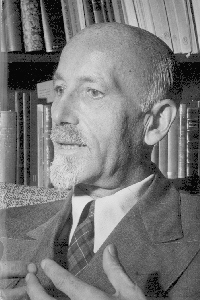
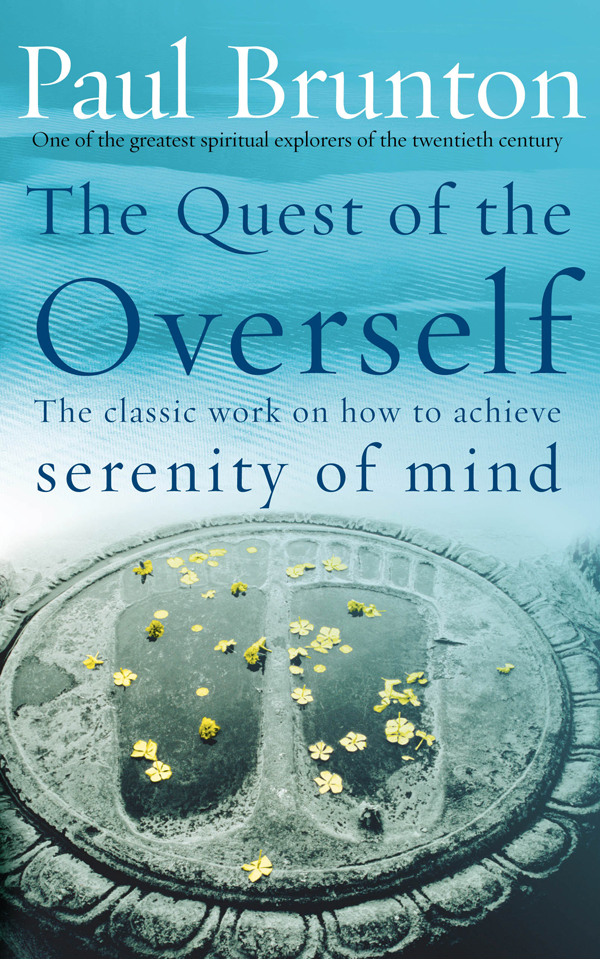
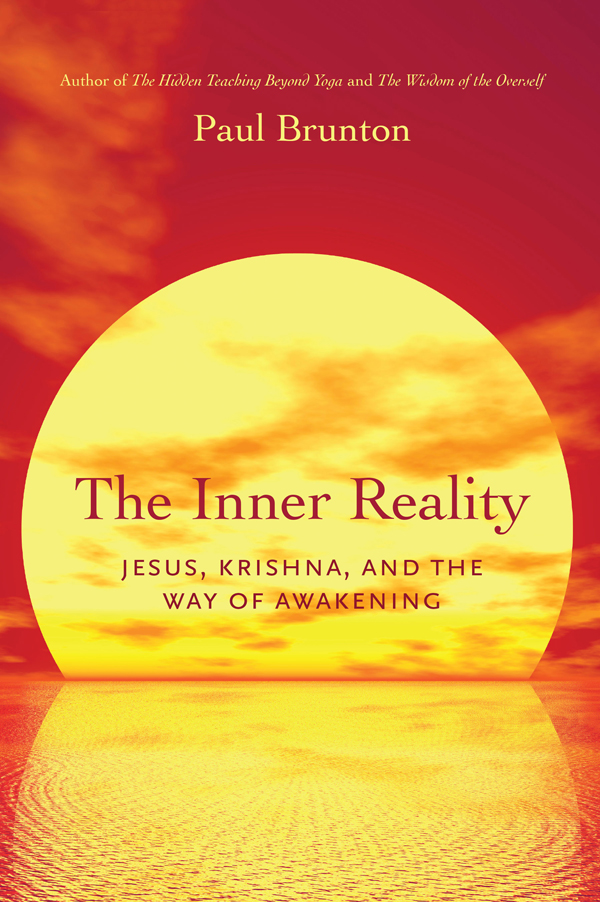
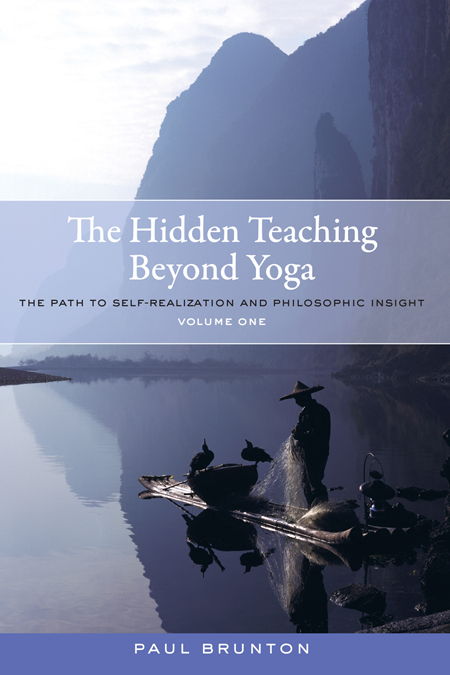
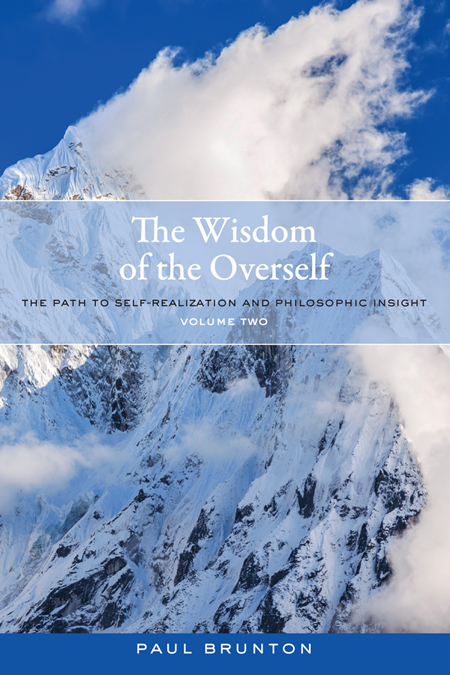
Paul Brunton helps us hear the melody behind the medley of today's "spiritual marketplace." His late writings raise the bar for what we can expect of spiritual teachings and teachers, and what we can do for ourselves. Born in London in 1898, he soon became a leading pioneer of much of what we now take for granted. He traveled widely throughout the world (long before it was fashionable) to meet living masters of various traditions with whom he then lived and studied. His eleven early books from 1934–1952 shared much of what he learned, and helped set the stage for dramatic east-west exchanges of the late 20th century. Paul Brunton left more than 10,000 pages of enormously helpful new work in notebooks he reserved for posthumous publication, much of which is now available as The Notebooks of Paul Brunton. See "The Complete Paul Brunton Opus" in blue below to see his many works available on this site. You can also search on Paul Brunton in the search bar to browse the selections, or click on a link below for specific connections.
Click here for a collection of articles about Paul Brunton.
Click here for The Notebooks of Paul Brunton.
To access small theme-based books compiled from Paul Brunton's writings, scroll down to Derived from the Notebooks below.
To access Paul Brunton's early writings, published from 1934–1952, scroll down to Paul Brunton's Early Works below.
To access commentaries on Paul Brunton and his work by his leading student, Anthony Damiani, as well as other writings about Paul Brunton and/or his work, scroll down to Commentaries and Reflections on Paul Brunton and His Work below.
Book Details
Potentially life-saving advice on trials that arise inevitably on the quest. The Sensitives is a timely, informed evaluation of mysticism, paranormal experience, sects and cults. Grounded in a clear distinction between productive spiritual practice and occult sidetracks, it reports on:
- how to distinguish self-flattering illusions from authentic spiritual intuitions
- what draws people (leaders and followers) to cults
- how to distinguish authentic spiritual teachers from dogmatic or deluded cult leaders
- how to bring the rational and the mystical into creative harmony
- much, much more
Category Sixteen: THE SENSITIVES
INTRODUCTION
1. MYSTICAL LIFE IN THE MODERN WORLD
Development
Continuing the tradition
Purpose
The scientific and the superstitious
2. PHASES OF MYSTICAL DEVELOPMENT
The transience of mystical emotions
From personal vision to impersonal being
From inner peace to inner reality
Moral re-education
At home in two worlds
Philosophy and mysticism
Rational mysticism
The power of rational faith
The goal of truth
The path beyond yoga
The completion in knowledge
3. PHILOSOPHY, MYSTICISM, AND THE OCCULT
A criticism of the mystic
The extremes of mysticism
Philosophy attracts the few
Distinguishing the spiritual and psychic
The lure of occultism
4. THOSE WHO SEEK
The wanderers
The innocents
The dreamers
The unbalanced
5. PSEUDO AND IMPERFECT TEACHERS
The prevalence of charlatans
Difficulty of recognizing them
Domination and narrowness
Incomplete teachers
The ego's ambition
6. DELUSIONS AND PAINFUL AWAKENINGS
The illusion of perfection
Superstition, imagination, and self-deception
Penalties of delusion
The value of disillusionment
7. THE PATH OF INDIVIDUALITY
Dangers of dependence
Independence
Be responsible
Use your judgement
Be discriminating
8. CHRISTIAN SCIENCE, OTHER SPIRITUAL MOVEMENTS
Virtues and faults
The hidden materialism
9. INSPIRATION AND CONFUSION
Conflicting tenets, contradictory 'revelations'
Interpreting mystical experience
Admixture of ego
10. THE IS IS NOT AN ISM
Limitations of dogma
Misuse of mystery
11. FANATICISM, MONEY, POWERS, DRUGS
Fanaticism
Deluded guides, gullible followers
Money
The abuse of power
Drugs
12. THE INTERMEDIATE ZONE
Tests, ordeals, temptations
Danger signals, protective measures
13. THE OCCULT
A choice of directions
The seductive shadow-world
Occultists and psychics
Occult practices
Hypnotism
Mediumship, channeling
14. THE SENSITIVE MIND
Psychic sensitivity, personal sensitivity
Telepathy, mental influences
Clairvoyance
Evaluating intuitions and 'messages'
15. ILLUMINATIONS
Properties of imagination
Spiritual reality, mental imagery
Conditioning factors
The true Word of revelation
“. . . a veritable treasure-trove of philosophic-spiritual wisdom.” —Elisabeth Kubler-Ross
“. . . sensible and compelling. His work can stand beside that of such East-West bridges as Merton, Huxley, Suzuki, Watts, and Radhakrishnan. It should appeal to anyone concerned personally and academically with issues of spirituality.” —Choice
“Vigorous, clear-minded and independent . . . a synthesis of Eastern mysticism and Western rationality. . . A rich volume.” —Library Journal
“. . . a great gift to us Westerners who are seeking the spiritual.” —Charles T. Tart
“A person of rare intelligence. . . thoroughly alive, and whole in the most significant, 'holy' sense of the word.” —Yoga Journal
For more reviews of the Notebooks series, click here
The Sensitives is a timely, informed evaluation of mysticism, paranormal experience, sects and cults. It is grounded in a clear distinction between productive spiritual practice and dangerous fascination with the occult. This distinction will be extraordinarily useful to a variety of readers: to individuals involved in or about to undertake any sort of spiritual practice, to psychologists and psychiatrists, and to people unable to understand or assess the interests and practices of friends or relatives associated with a sect or cult.
The Sensitives is a necessarily complex volume, covering one of the three largest sections in the notebooks series; the others are Human Experience (category thirteen) and What Is Philosophy? (category twenty). During our visits with P.B., he often stressed the urgent need to differentiate spiritual and psychic practices — in oneself, in others, and in various groups and teachings. This concern carries over into his writings, from the early works on India and Egypt, through the several notebooks of interviews with mystics around the world, and into the 4000 paras selected here.
There comes a time when a little success in meditation, study, or self-discipline begins to show itself: a time when some parts of the ego thin out sufficiently to let a little light in. This light shines through the cracks in the ego, but also powerfully lights up the ego itself. These refracted colors are so bold and beautiful, the pure light is so hard to look into, that most questers begin to wander from their intended goal. This category addresses the nature and end result of following these lesser lights — the revelatory, intuitive, visionary, psychic, mediumistic, and magical. It examines the groups of eager followers which spring up around leaders who have sought and gained some mastery of these lights, but who themselves are, in one form or another, powerfully misled. As the light of the soul shines into the recesses of the ego, it activates the latent desires for fame, power, wealth, physical immortality, seership, and wisdom. It is only this last desire, the desire for wisdom, that leads on through what P.B. has termed "the intermediate zone," and on into the region of true spiritual practices, which he calls philosophy.
Why does this category fall between arts and religion? It follows the arts because all visions, voices, messages, and psychic phenomena are processes of the imagination, which is also the primary tool of artists. The difference is that many artists intentionally use the imagination as a lens through which to peer at the spiritual world, a practice which is at once their limitation and their protection. Mystics and occultists, on the other hand, often believe that there is no significant difference between their images and the reality behind it, and this contributes to the contradictory nature of their doctrines. This category precedes the one on religion because, after all, all religions are based on someone's revelation; all formal and informal religion works with some image — visual, verbal, or mental — of Divinity. Before we dare yield up our faith to such icons, it behooves us to know what is authentic in them and what is man-made, what is original and what is a potpourri of our background, past lives, presuppositions, biology, and education.
So who should read this book? Every quester, for it is written to all of us. The beginner will find guidance for understanding the weaknesses, innocence, and naivete that influence the choice of who and what to follow. The practicing quester when encountering these dream-world phenomena is often lured strongly into the maze through blind beliefs and unbalanced strengths. For such a person, this volume provides explanations for what is happening, suggestions for evaluating the outcome, and directions for further progress. For the advanced mystic faced with the prospect of leadership, P.B. points out exactly how obstacles to truth, rationality, and involvement in the world will be raised by their enthusiastic followers or their own short-sighted follies.
This category lies at a crossroads between the earlier topics, dealing with the preparatory phases of the quest, and the later ones written for those old souls ready to enter into the life of higher philosophy. Many topics are covered in each part of the series — searching out relationships to groups and teachers, the practices of meditation, emotional and moral development, intellectual work, and the mysterious forces of light and darkness present in nature. Here, P.B. presents these subjects as they are seen through the vitalized powers of the inward-directed mind, while in the earlier categories they were treated in the light of our ordinary consciousness. In the categories that follow, P.B. writes from the unique perspective of philosophic insight — on reverential and devotional life, the balanced character of the philosopher, the inquiry of mentalism, intuition from the Overself, advanced meditations, and the encounter with those authentic teachers who have attained enlightenment. To read this category alone without reference to these other works is to read a dream, with no knowledge of the waking personality, and no conclusive insight into the reality it seeks to symbolize. So we earnestly hope that readers will reference these other works when reflecting on the issues presented here.
In his own terse outline of this category, P.B. made no indication as to the order, or hierarchy, of the development of feeling, will, and intellect. Since he does treat them separately, we had to put them in some order, based on the continuity we perceived among the paras. Their sequence (in chapter 2) is our own, not his, and should be taken only as a working model. Similarly, there are many paras of blunt criticism of practices, beliefs, and activities intrinsic to this region of imagination; some readers who have traveled far in this realm and have gained something for their efforts may object to the potency of these lines. P.B. traveled here extensively as well, and in his decades of inner and outer travel around the globe he observed the long-range consequences of following the colored lights, rather than the pure. He has approached these wanderings with philosophic insight, and so helps us to adjust our compasses, that we too may end our days in the light of the Overself, not in the shadows of the mind.
Editorial conventions here are the same as stated in the introductions to Perspectives and The Quest. Likewise, (P) at the end of a para indicates that it also appears in Perspectives, the introductory volume to this series.
PREFATORY:
We should distinguish the theories and doctrines woven round the mystic's experience from the significant features of the experience itself. And those features are: the awareness of another and deeper life, a sacred presence within the heart, the certitude of having found the Real, the gladness and freshness which follow the sense of this discovery.
The real is more miraculous than the illusory psychic, more occult than the so-called occult world, more fascinating than the fantastic.
From chapter 1: MYSTICAL LIFE IN THE MODERN WORLD
1
Mysticism is simply an attempt to provide a system for those whom ordinary religion has ceased to help. It says, in effect, here is a practical means and a demonstrable method whereby you may verify for yourself the essential basic truth that there is a soul in man.
2
The devotional life consists of prayer and worship; the mystical life consists of intuition and meditation.
3
Mysticism is not a new creed which one slips on with the ease with which we slip on a new dressing gown; it is a LIFE.
4
Few are able to have genuine mystical experiences and yet be able to reflect on them impartially and knowledgeably. One who is able to do this successfully should go far on the Spiritual Quest.
5
Mysticism is a mode of feeling which elevates consciousness to its highest self.
6
There are certain conditions of the mystical life which remain indispensable, quite irrespective of the century or the milieu in which aspirants live. There are certain laws of mystical progress which remain immutable under any or every kind of human situation.
8
The dangers of a misguided mysticism are real, but with the proper safeguards and protective disciplines they vanish. The shaping of a sound, worthy, and strong character as prerequisite and accompaniment to all intuitive or mystical experiences is the very first of these safeguards.
From chapter 11: FANATACISM, MONEY, POWERS, DRUGS
The abuse of power
89
Before they can make fools of their followers, they have first to be foolish themselves. This is obvious enough in the case of those whose disordered brains breed wild fancies, but not in the case of those whose crafty self-seeking shows active intellect. Here the foolishness is moral, for the practice of such evil breeds a dark karma.
90
This is not difficult because his most devout followers are composed of the most impressionable, the most suggestible and easily deceived elements of society. They are the younger generation on one side and hysterically emotional women on the other, who readily come to believe what is constantly said, not what is rightly or rationally said. Their minds are too untrained to detect in his language that over-emphasis which conceals doubt. He resorts to the methods of a mountebank in order to impress such people. When persons become so mesmerized that the actual state of affairs no longer matters to them while the supposed state of affairs alone matters to them, when crazy rationalizations of wrong-doing enable them to justify it as right-doing, and when the will to believe wrongly has eliminated the need to reason logically, their doom is certain. The harm their teacher does to their possessions may be terrible but the harm which he does to their minds and hearts is worse. He turns morality upside down and they eventually accept the upset.
91
These evil teachers question the moral values offered by religious prophets and mystical seers. They proclaim the bad man to be better than the good one, the egoist superior to the altruist, and the bully a more evolved type than the meek.
From chapter 15: ILLUMINATIONS
Properties of imagination
1
In the mystical aspirant's life, his imaginative faculty, when properly used, keeps the Guide or Master constantly and vividly before his attention to inspire, to correct, and to lead him. But improperly used, it leads him astray into fantasies and falsities.
2
If he continues to gaze at the mental images which he thus sees in his vision, rapt and absorbed as he is, he may eventually mesmerize himself into a firm belief in their external reality. But whether they be Gods and saints or lights and colours, these strange visions which pass before his eyes are partly creations of the mind itself. Many so-called clairvoyant and occult phenomena are really mental projections, but it is perfectly possible for them to be so vivid as to appear as if they were outside their seer. The experiences of them have been largely, if unconsciously, created within the tortuous recesses of the narrator's own cranium. He visualizes mental images with such intensity and exuberance that the imagined forms and events appear to him as external objects. This kind of thing has now come even within the sweep of scientific investigation. A group of psychologists, professors attached to American universities, have discovered that the faculty of perceiving mental images so vividly that they appear to be outside objects is not uncommon among children, and they have bestowed the term "eidetic imagery" on this power. There is little difference between such imagining and that of those grown-up children who unconsciously create their own visions. In both cases the visions are the result of the percipient's own mental construction and have no independent existence.
3
The mind can make its own experiences, from the lowest to the highest, by imagination or by intellection, by faith or by expectancy. They may seem real enough to the experiencer but yet be mere aberrations, illustrating only this power of the mind, rather than its capacity to find truth. Worshippers of cults, devotees of gurus, do not usually know this.
In his own words:
“Writing, which is an exercise of the intellect to some, is an act of worship to me. I rise from my desk in the same mood as that in which I leave an hour of prayer in an old cathedral, or of meditation in a little wood . . .” —from Perspectives, volume 1 in The Notebooks of Paul Brunton, p. 143
“P.B. as a private person does not count. There are hundreds of millions of such persons anyway. What is one man and his quest? P.B.’s personal experiences and views are not of any particular importance or special consequence. What happens to the individual man named P.B. is a matter of no account to anyone except himself. But what happens to the hundreds of thousands of spiritual seekers today who are following the same path that he pioneered is a serious matter and calls for prolonged consideration. Surely the hundreds of thousands of Western seekers who stand behind him and whom indeed, in one sense, he represents, do count. P.B. as a symbol of the scattered group of Western truth-seekers who, by following his writings so increasingly and so eagerly, virtually follow him also, does count. He personifies their aspirations, their repulsion from materialism and attraction toward mysticism, their interest in Oriental wisdom and their shepherdless state. As a symbol of this Western movement of thought, he is vastly greater than himself. In his mind and person the historic need for a new grasp of the contemporary spiritual problem found a plain-speaking voice . . .” —from Perspectives, volume 1 in The Notebooks of Paul Brunton, p. 145
Learn more about Paul Brunton through articles at the Paul Brunton Philosophic Foundation web site
Electronic versions of this book are available from all major (Amazon Kindle, Barnes & Noble, Apple, Kobo, etc.) and most smaller ebook vendors. Please don't try to order ebooks directly from us, as we are not yet able to deliver anything to you in a preferred electronic format.
To see all our Paul Brunton titles, scroll down to The Complete Paul Brunton Opus below.
To see and/or order individual volumes in The Notebooks of Paul Brunton, hover your mouse over the specific cover in the Notebooks section of Complete Paul Brunton Opus below, then click on Details in the box that appears within it.
Click here to see or order the complete set of The Notebooks of Paul Brunton.
About Paul Brunton
Paul Brunton helps us hear the melody behind the medley of today's "spiritual marketplace." His late writings raise the bar for what we can expect of spiritual teachings and teachers, and what we can do for ourselves. Born in London in 1898, he soon became a leading pioneer of much of what we now take for granted. He traveled widely throughout the world (long before it was fashionable) to meet living masters of various traditions with whom he then lived and studied. His eleven early books from 1934–1952 shared much of what he learned, and helped set the stage for dramatic east-west exchanges of the late 20th century. Paul Brunton left more than 10,000 pages of enormously helpful new work in notebooks he reserved for posthumous publication, much of which is now available as The Notebooks of Paul Brunton. See "The Complete Paul Brunton Opus" in blue below to see his many works available on this site. You can also search on Paul Brunton in the search bar to browse the selections, or click on a link below for specific connections.
Click here for a collection of articles about Paul Brunton.
Click here for The Notebooks of Paul Brunton.
To access small theme-based books compiled from Paul Brunton's writings, scroll down to Derived from the Notebooks below.
To access Paul Brunton's early writings, published from 1934–1952, scroll down to Paul Brunton's Early Works below.
To access commentaries on Paul Brunton and his work by his leading student, Anthony Damiani, as well as other writings about Paul Brunton and/or his work, scroll down to Commentaries and Reflections on Paul Brunton and His Work below.
.jpg)
.jpg)
.jpg)
.jpg)
.jpg)
.jpg)
.jpg)
.jpg)
.jpg)
.jpg)
The Complete Paul Brunton Opus:
Paul Brunton's most mature work, in the order he specified for posthumous publication.

Smaller books on popular/timely themes, developed from the Notebooks and published posthumously.

Paul Brunton's works published during his lifetime from 1934-1952



Commentaries/Reflections by other authors on Paul Brunton or his works.


Of Special Interest
-
The Notebooks of Paul Brunton
Exclusive to Larson Publications
The highly acclaimed series that sets a new high-water mark for spiritual books.
Learn More -
New and timely!
The
Magdalene
Gates
"The book my soul has been thirsting for." —Mirabai Starr
Learn More -
Anthony Damiani (1922–1984)
An introduction to his ground-breaking work
"A truly great man . . . one of my closest spiritual brothers." —Dalai Lama
Learn More -
"Cosmic forces and indomitable power"
Soul Stories
Narrative sculpture — symbols that speak directly to intuition and spirit . . .
Learn More -
A good place to start with Paul Brunton
Perspectives: The Timeless Way of Wisdom
"Paul Brunton was a great original and got to a place of personal evolution that illumines the pathways of a future humanity." —Jean Houston
Learn More -
"A significant contribution" —Publishers Weekly
Ancient Rage
Is the deep life of the feminine duped by the patriarchal god? Will old age alter the intensity of our feeling?
Learn More -
A new I Ching for our time
The Toltec
I Ching
A practical guide to hope, motivation, magic, and enlightenment — for young and old
Learn More -
Lex Hixon (1941–1995)
COMING
HOME
"The single best introductory book ever written on the world's great mystical traditions." —Ken Wilber, on Lex's Coming Home
Learn More -
Our newest Mom's Choice Gold award-winner!
Sharoo: Teen Queen
In this YA sequel to the Eedoo trilogy, Sharoo risks everything in a swirly, chaotic dimension beyond Plash
Learn More -
"breathtaking . . ."
"Invites us to engage in full awareness with the living wisdom of the cosmos." —The Mountain Astrologer
Learn More